The first first-instance verdict for femicide in the Federation of Bosnia and Herzegovina was handed down on November 6 at the Cantonal Court in Mostar. Anis Kalajdžić was sentenced to a consolidated long-term prison term of 45 years for the murder of Aldina Jahić and other criminal offenses. This verdict marks a significant milestone in the implementation of amendments to the Criminal Code of the Federation of Bosnia and Herzegovina, which established the aggravated murder of a woman—specifically, gender-based murder—as a distinct criminal offense.
Yet, behind this first application of the law lies another life lost. No verdict, regardless of the severity of the sentence, can return Aldina Jahić to her family. Therefore, this moment is not a cause for celebration, but rather an opportunity to reflect on the importance of these legal changes—and on the responsibility of institutions and society as a whole to do everything possible to identify and halt violence before it leads to the most tragic consequences.
From Civil Advocacy to Legal Change
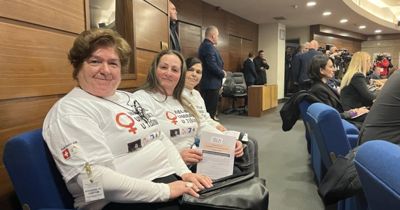
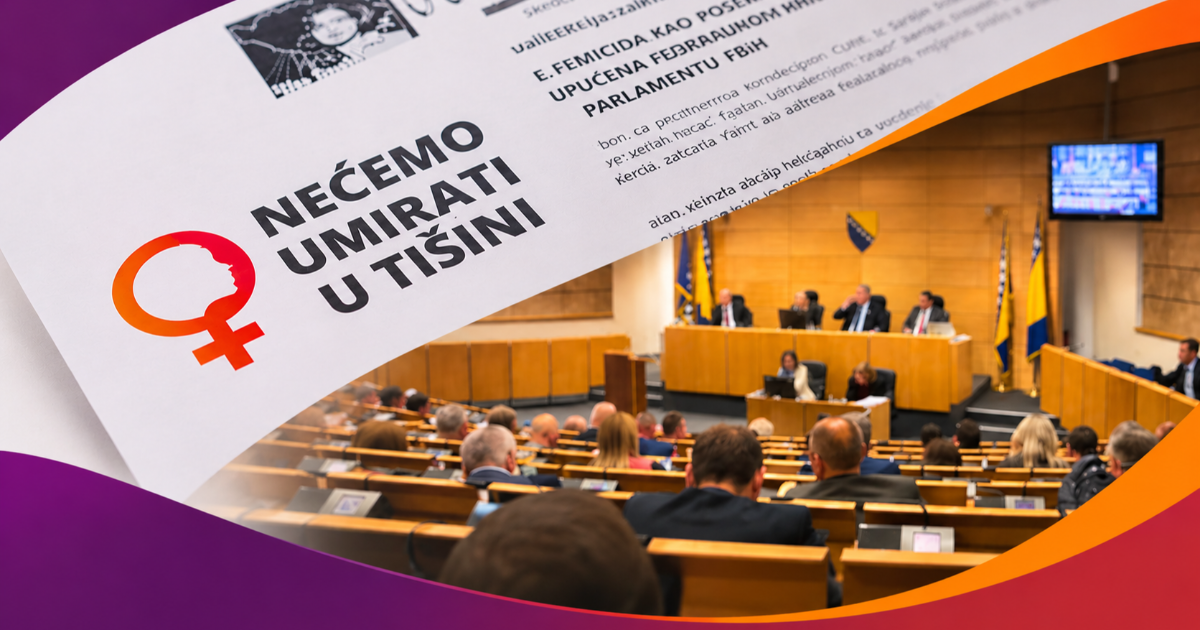
The introduction of femicide as a distinct criminal offense was the result of a long-standing struggle by civil society organizations, activists, and citizens who demanded that gender-based murders of women be explicitly recognized within criminal legislation. A significant contribution to this process was made by the campaign "We Will Not Die in Silence" (*Nećemo umirati u tišini*), which the organization "Glas žene" (Voice of Women) from Bihać—in collaboration with partner organizations "Tim volim život" (Team I Love Life) from Cazin, "Izvor" (Source) from Sanski Most, "Ženska vizija" (Women's Vision) from Tuzla, and the Citizens' Initiative of Mostar—carried out as part of the PRAGG project (Proactive Citizens).
As stated by the organization "Glas žene" in a release following the first verdict, on October 29, 2024, they submitted an initiative to the Federal Ministry of Justice and the Parliament of the Federation of Bosnia and Herzegovina (FBiH) to establish femicide as a distinct criminal offense. This initiative was supported by 14 parliamentary representatives and delegates, as well as 3,500 citizens' signatures. Since the initial proposal for legislative amendments did not include this provision, the organization drafted and submitted a specific amendment on January 16, 2025, proposing the introduction of Article 166a: "Aggravated Murder of a Female Person." According to the association, this amendment was accepted and incorporated into the final legal text.
Through public actions, dialogues with institutions, expert forums, and direct advocacy for legislative changes, these organizations continued to mobilize both the general public and decision-makers. Over time, the campaign garnered the support of more than 100,000 citizens, as well as the professional community, the media, and other social stakeholders. Following months of advocacy and numerous obstacles, the Parliament of the Federation of Bosnia and Herzegovina adopted amendments to the Criminal Code in May and June 2025; the legislation was subsequently published in the *Official Gazette of the FBiH* (Issue 58/25) on August 1 of the same year.
The introduction of Article 166a—"Aggravated Murder of a Female"—established a legal basis for recognizing and penalizing gender-based killings of women as a distinct criminal offense. A recent ruling by the Cantonal Court in Mostar marks the first instance in which this legal provision has been applied in judicial practice.
"For us, this verdict offers a modicum of satisfaction after the long struggle to have femicide recognized as a distinct criminal offense. With this decision, the judiciary has restored some trust in the system and, most importantly, has acknowledged gender-based killings of women through the legal classification of 'aggravated murder of a female'," stated Neira Raković of the organization "Glas žene" (Voice of a Woman) regarding the verdict.
This process underscores the importance of organized civic action demonstrating how initiatives by civil society organizations—bolstered by support from citizens, experts, and institutions—can lead to concrete legislative change.
The law can penalize violence. But how can it be prevented?
While the first verdict is significant for the implementation of the new legal framework, it also raises a question that must not be sidelined: what steps are needed to ensure that such verdicts never become necessary in the first place?
Criminal law allows for the punishment of perpetrators, but the protection of women cannot begin only after violence has already escalated. It requires the timely identification of risks, a serious response to reports of violence, coordination among relevant institutions, and accessible support for women subjected to violence.
It is equally important to examine the social patterns in which violence is justified, downplayed, or viewed as a private matter. The responsibility for preventing violence cannot rest solely on the women who endure it. It lies with institutions, as well as with a society that must stop tolerating behaviors and attitudes that normalize violence.
The true measure of success is the number of prevented cases of violence.
The first verdict for femicide marks an important step in the development of case law and the application of legal amendments that civil society organizations have advocated for years. At the same time, it serves as a reminder that justice delivered after a crime has been committed—however important—cannot replace timely protection.
Therefore, it is essential to continue working on the consistent application of the law, the training of police and judicial officials, the strengthening of institutional cooperation, and the development of preventive mechanisms within local communities. The success of the fight against femicide cannot be measured solely by the number of convictions handed down or the severity of sentences; rather, it is primarily measured by the capacity of society and institutions to recognize violence, protect women, and prevent further killings.
This responsibility persists well beyond the initial verdict and any subsequent legislative changes.
For this very reason, initiatives by civil society organizations—which work within local communities to prevent gender-based and domestic violence, improve institutional cooperation, and establish more effective protection mechanisms—are of great importance. Such initiatives are also supported through the PRAGG project, to enhance the response to violence within local communities and strengthen cooperation between institutions and citizens.
These activities demonstrate that systemic change does not end with the adoption of laws. It also entails equipping institutions to identify danger, respond in a timely manner, and provide protection before violence leads to a tragic outcome.