
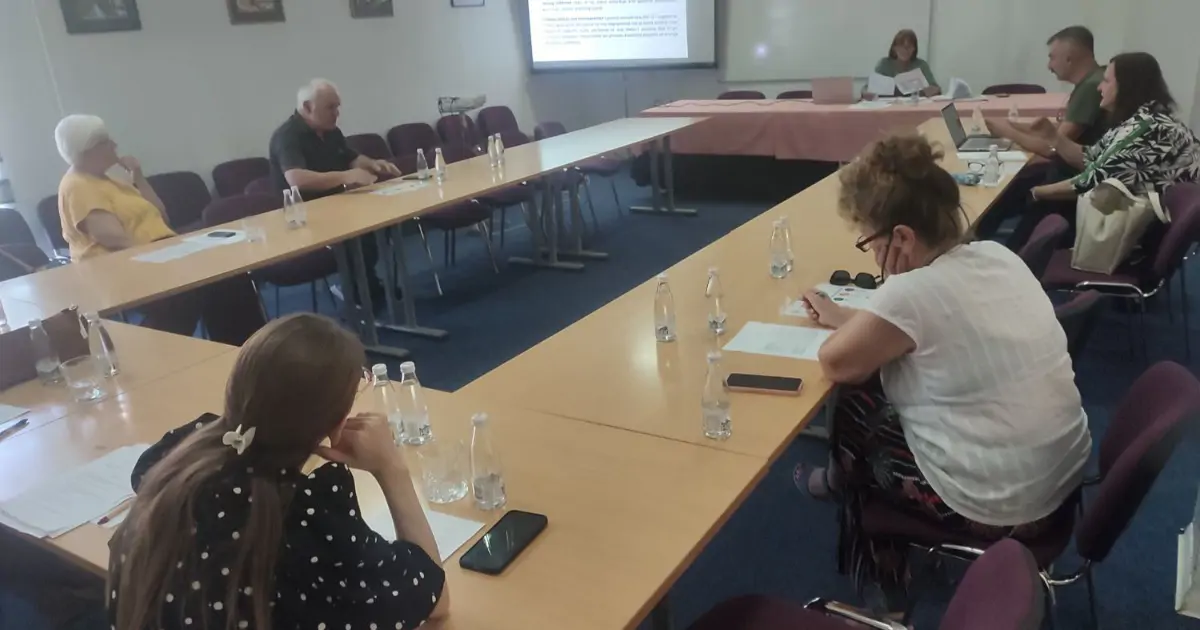
On 30 July 2026, the Center for Civic Cooperation in Livno organized a meeting with civil society organizations and citizens to announce the launch of the campaign and initiative "Transparent and Accountable Allocation of Funding to Public Interest Organizations." The campaign aims to establish a transparent, measurable, and systematic framework for granting public interest status to associations in the City of Livno, based on their social impact and objective indicators of performance.
Currently, when issuing calls for project proposals for non-governmental organizations, the City of Livno defines the concept of "public interest" through annual priority sectors it chooses to support, most commonly culture, sports, technical culture, social welfare, inclusion, and similar areas. However, the City has not adopted a dedicated decision regulating the recognition of associations as organizations of public interest. Instead, this status is effectively determined through annual budget grants and decisions of the City Council.
This approach lacks transparency and creates the possibility—something that has already occurred in practice—that organizations with a long-standing record of contributing to the community are repeatedly denied public interest status and the funding they believe they merit, despite implementing high-quality projects that benefit the local community.
Given concerns about the preferential treatment of certain organizations that consistently receive funding through the municipal budget, the initiative calls on the City of Livno to adopt a Decision on the Conditions and Procedure for Granting Associations and Foundations the Status of Organizations of Special Importance or Public Interest to the City of Livno and on Their Financing.
If adopted, the decision should establish clear and objective criteria for determining public interest status and allocating financial support to these organizations, as well as to all other organizations operating within the City.
The proposed criteria should be fair, transparent, and measurable, including:
the number of direct beneficiaries, i.e. how many citizens of Livno benefit from an organization's work;
the level of volunteer engagement, measured by the number of volunteers contributing without compensation;
transparency in operations, including the public publication of annual narrative and financial reports;
social impact, particularly support provided to marginalized groups within the community; and
value for public money, assessing what the City of Livno receives in return for the funding allocated to one organization compared with another.
In addition to clear evaluation criteria, it is equally important to establish a transparent procedure for appointing the commission responsible for granting public interest status. The commission should not consist solely of City administration employees or City Council members, as this may create risks of political influence or decisions based on personal connections. Instead, it should also include one independent expert and one representative of a successful civil society organization that is not applying for funding in that particular year.
Each commission member should sign and provide a written justification for their individual scoring sheet. These evaluation sheets should be made publicly available and accessible to all interested organizations.
Participants at the meeting agreed that the current practice of determining public interest status solely through the annual public call for NGO funding is not acceptable. In addition to the criteria established through the public call, the process of granting public interest status and allocating funding to these organizations should be conducted separately from the annual funding scheme for non-governmental organizations