
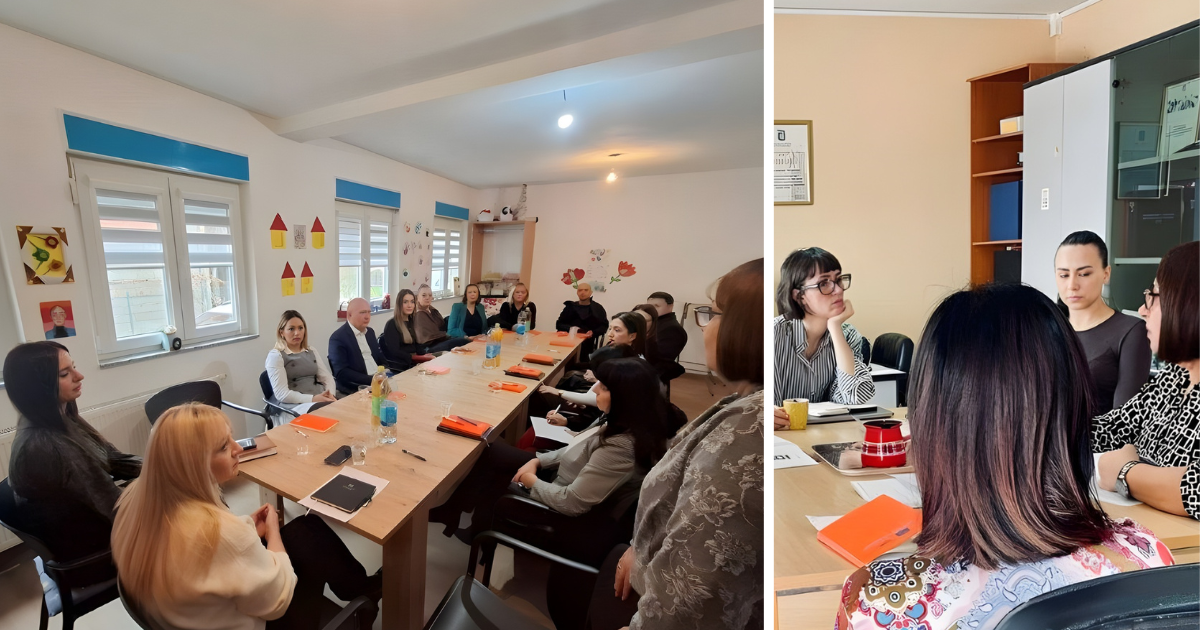
The protection of victims of domestic and gender-based violence, as well as the prevention and suppression of violence that violates fundamental human rights and freedoms guaranteed by constitutions, laws, the Council of Europe Convention on preventing and combating violence against women and domestic violence, and other international treaties, has been formally recognized as a matter of public interest. However, in Bosnia and Herzegovina, this problem is still largely confined to the level of strategies and declarative commitments, without sufficient concrete measures and their consistent implementation in practice.
This problem is being addressed by the Citizens' Association "Budućnost" from Modriča, with the support of the PRAGG project. The association has been operating for almost three decades, and more than 25 years ago, it established the first Safe House in the Republika Srpska. More than 3,900 women and children have found refuge in this institution so far.
Starting from the fact that domestic violence continues to be a serious social problem, especially due to the slow and insufficiently efficient reactions of institutions, the lack of systemic measures of comprehensive support, and insufficient public awareness of the consequences of violence, the Citizens' Association "Budućnost" has focused its activities on additional action in this area.
By the end of the year, through a campaign supported within the PRAGG project, the focus will be on reducing domestic violence in Modriča by improving the institutional system of protection and support for victims, but also strengthening the community's awareness of its role and responsibility in preventing violence.
"We will strive to improve the system of protection and support for victims of domestic violence in the municipality of Modriča through a series of activities in cooperation with local authorities, by strengthening the institutional response and available services, raising public awareness about the problem of domestic violence, available protection and support mechanisms, and the importance of prevention. We expect the result of these activities to be the adoption of an Action Plan for the Prevention and Protection from Domestic Violence and Gender-Based Violence, which includes the adoption of a new policy that would be accompanied by a specific budget item in the local budget." - information from the Modriča association.
They also explain that domestic violence includes any act of physical, sexual, psychological, or economic violence that occurs within the family or household, as well as between former or current spouses, regardless of whether the perpetrator shares or previously shared the household with the victim. They also emphasize that the adopted strategies and action plans require specific, clearly defined measures to be effectively implemented in practice.
"We consider it important to conduct research in the next month on the problems that women and children face in the family, whether they are familiar with the protection mechanisms, what is the attitude of the protection subjects towards them if they reported violence, and what kind of support would be most important for them. The results obtained will be used as a tool, both for lobbying local authorities to develop an Action Plan for the Prevention and Protection from Domestic Violence, and for the protection of subjects from violence, which should improve their work in accordance with the findings and in accordance with the signed Protocol on Action and Cooperation," the association says.
They also remind us that violence against women is a violation of human rights and a form of discrimination. It includes all acts of gender-based violence that lead to or may lead to physical, sexual, psychological, or economic harm and suffering of women, including threats of such acts, coercion, and unlawful deprivation of liberty, whether in public or private life.
"After the establishment of the Safe House, the Budućnost NGO lobbied through an advocacy campaign to incorporate domestic violence as a criminal offense into the Criminal Code of the Republic of Srpska, because the Safe House was not yet recognized in the system of protection against violence, and institutions in our and other local communities were not interconnected, they shifted the blame for (non)work to other institutions, and they noticed that it was necessary to improve multisectoral cooperation between them. The first Law on Protection from Domestic Violence and Family Community was adopted in 2005, and the efforts of the NGO to have Safe Houses recognized in the system, and for the Government of the Republic of Srpska to finance 70% of the costs, and local communities the remaining 30%, were successful. The problems in the work of the Safe House were that multisectoral cooperation did not exist in the first years after the criminalization of domestic violence, and the victims were left to their own devices. The Safe House was often under surveillance by perpetrators, but the police did not react under the motto that they would react if someone broke into the facility. "Modriča model", i.e. the activities and results of the NGO "contributed to the fact that the latest amendments to the Law on Protection from Domestic Violence in the Republika Srpska in 2019 stipulate that coordination bodies be established in local communities" - while announcing the next activities in "Budućnost", they referred to the work of the "Safe House", for which they are recognizable even beyond the borders of our country.