
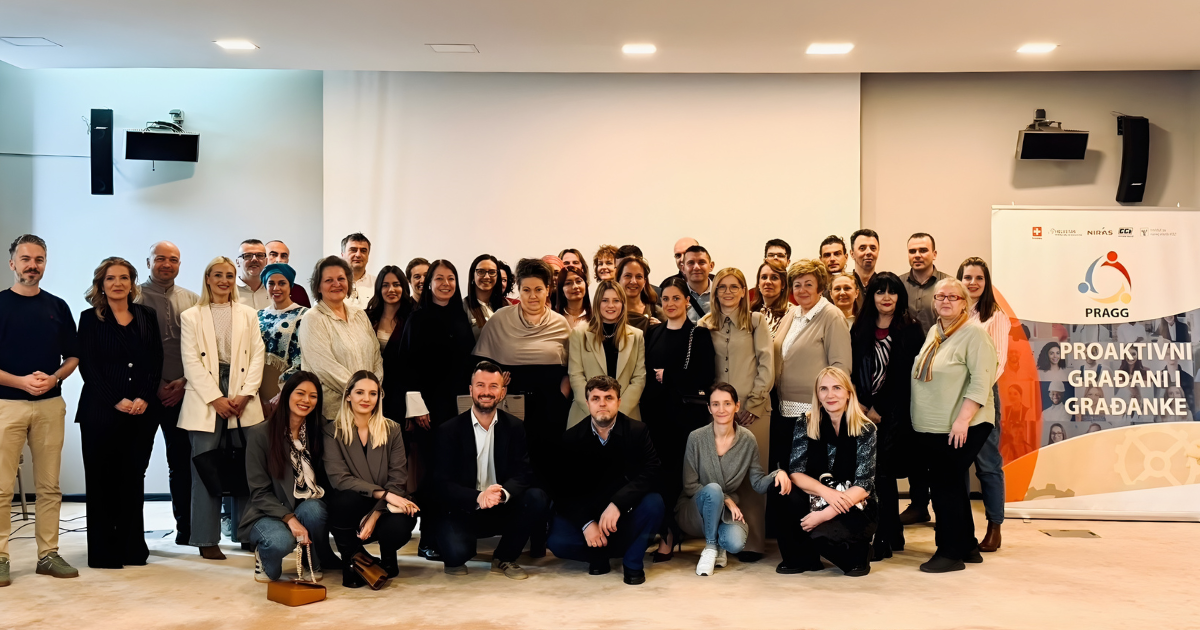
The Civil Society Consultations were held in Sarajevo as part of the PRAGG project, bringing together representatives of civil society organizations from across Bosnia and Herzegovina to openly exchange experiences about the environment in which they operate.
The focus of this year's Consultations was on analyzing obstacles and challenges to the Work of Civil Society in Bosnia and Herzegovina. The goal was to present key findings and also to verify and supplement them through the experiences of organizations operating on a daily basis in the field.
During the discussions, participants highlighted that their challenges cannot be viewed in isolation. Key obstacles include unstable and unpredictable funding sources, complex administrative and legal frameworks, and limited opportunities for participation in decision-making processes. Participants also noted increasing pressures and distrust toward civil society. These challenges affect organizational sustainability as well as the ability to plan and develop long-term programs.
The findings were largely confirmed during group work. However, participants emphasized specific sectoral and local differences that shape how obstacles appear in practice. There is a strong need for better cooperation between institutions and civil society organizations. Clearer procedures that govern their work are also needed. Consultations revealed examples of good practice, but these often remain isolated and underrecognized.
In addition, the participants of the Consultation identified possible solutions, as well as key actors who should be the carriers of change. The most realistic steps in the coming period were identified as improving the dialogue between government and civil society, simplifying administrative procedures, creating more transparent and stable funding models, and strengthening mechanisms for the inclusion of organizations in decision-making processes. Government institutions at all levels, as well as civil society organizations themselves, which can more strongly advocate for the improvement of their position through joint action and networking, were recognized as key carriers of these changes. The important role of international partners in supporting processes leading to long-term and systemic changes was also highlighted.
The Consultations have once again confirmed that civil society in Bosnia and Herzegovina has the knowledge, experience, and capacity to actively contribute to improving the social environment, but that this requires the creation of a more stable and supportive framework for their work. The PRAGG project will continue to work on improving this environment in the coming period, relying on the insights and recommendations gathered during these Consultations.
Please wait...