The experience from the Federation of Bosnia and Herzegovina shows that youth-led initiatives can lead to concrete and visible change. In the 2026 Budget of the Federation of BiH, the Youth Transfer was reinstated and increased to a record 1,000,000 KM, sending a clear message that young people are recognised as an important social resource and that their role has a place both in public policies and in the budget. This decision is also a strong example of how dialogue and persistence can result in systemic solutions.
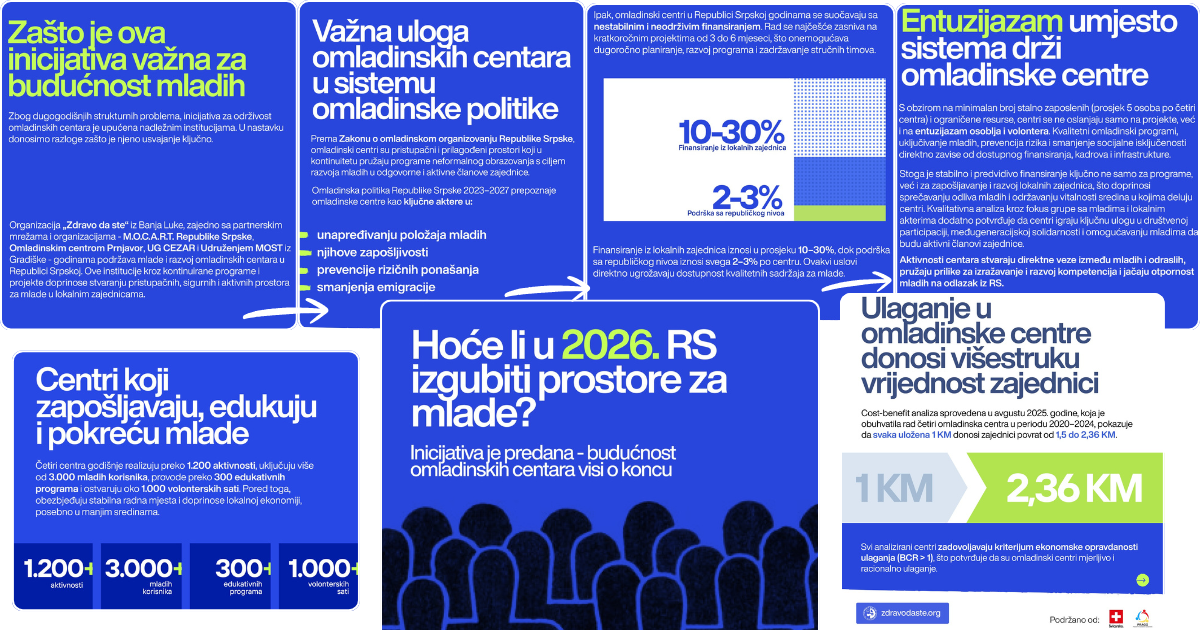
In Republika Srpska, youth centres also have a clearly defined role within the legal framework and are recognised as important spaces for youth development. However, in practice, they continue to face challenges, primarily related to the lack of stable and long-term funding, which often makes their work dependent on short-term projects.
The organisation “Zdravo da ste” says that they see the example from the Federation of BiH as encouragement and proof that change is possible. On this occasion, they congratulated the Youth Council of the Federation of BiH, stating:
“Congratulations to the Youth Council of the Federation of BiH – this is what it looks like when trust in young people is reflected in the budget. One million KM for youth! Well done! Unfortunately, in Republika Srpska, youth centres still operate on a project-to-project basis, year by year, without long-term security. Dear decision-makers, youth centres are not a hobby. They are key infrastructure for young people – and all infrastructure requires planning.”
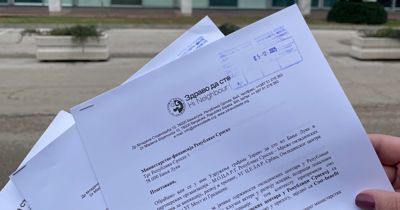
As a reminder, to improve the position of young people, at the beginning of December 2025, the organisation “Zdravo da ste”, together with partners from the Network of Youth Centres of Republika Srpska (M.O.C.A.R.T.) and youth centres from Srbac, Prnjavor, and Gradiška, with the support of the PRAGG project, submitted an initiative to the competent institutions of Republika Srpska. The initiative includes proposals to introduce a dedicated budget line for youth centres starting in 2026, ensure multi-year funding, strengthen the institutional involvement of youth centres in shaping youth policies, standardise minimum operational capacities, and clearly define the obligations of local authorities in supporting youth centres. Special emphasis was also placed on the possibility of establishing a fund to co-finance projects within EU programmes such as IPA and Erasmus+.
According to the initiative’s proponents, a meeting has been held so far with the Ministry for European Integration and International Cooperation of Republika Srpska, during which support was expressed. At the same time, the organisations note that invitations for meetings have been sent to other relevant institutions as well, and that they expect further dialogue in the coming period.
“The initiative has been submitted. We are still waiting for a response. In Republika Srpska, youth centres continue to operate without systemic support, long-term security, or stable funding. Will 2026 be the year when spaces for young people disappear – or the year when the state finally takes responsibility?” ask representatives of the organisation “Zdravo da ste”.
Learn more about the initiative on the organisation’s Facebook page.