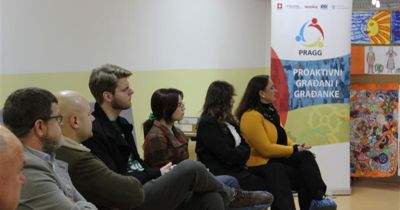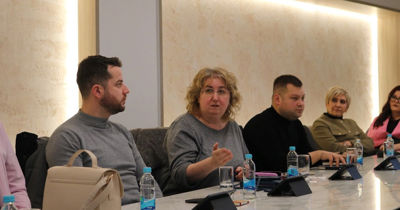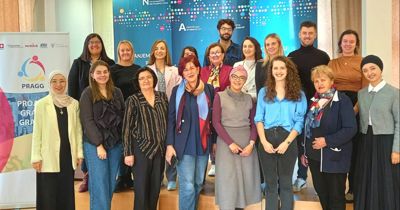
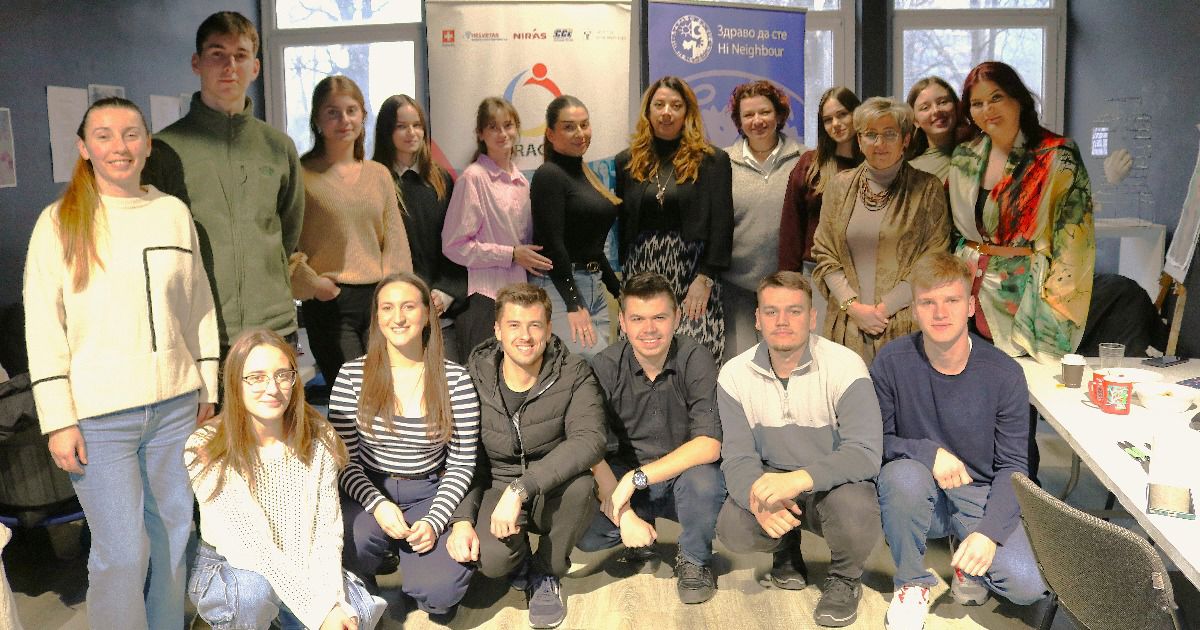
At the end of last year, within the framework of the PRAGG project, the fourth study visit was organized, bringing together organizations from different parts of Bosnia and Herzegovina in Banja Luka. The visit focused on the sustainability of youth centers, strengthening youth organizing, and fostering stronger connections within local communities. The host of the visit was the youth center and association “Zdravo da ste”, while discussions centered on strengthening the capacity and integrity of organizations operating in smaller communities, as well as ensuring the inclusiveness of spaces dedicated to young people.
Rather than being conceived as a traditional presentation of organizational work, the study visit was designed as a space for open dialogue and experience exchange. Tanja Boromisa, Executive Director of the association “Zdravo da ste,” emphasized that this format was what made the visit particularly valuable.
“We did not see this visit merely as hosting guests, but as an opportunity to engage in collective dialogue, to present our work to one another, and to hear different perspectives. It was especially meaningful to us that the visiting organizations shared their own experiences, as this inspired us to reflect on some of our practices and further improve our engagement with young people, children, and the wider community,” she stated.
She also highlighted the importance of networking among organizations operating in different local contexts, often referred to as bridge-building, particularly for small communities that frequently face limited resources.
“Some of the participating organizations were ones we had not previously cooperated with. It was important for us to get to know each other, learn about their approaches, and open space for future joint initiatives. These types of meetings represent mutual learning—and that is the kind of learning we value most,” she added.
Participants of the study visit also emphasized the importance of inclusive youth centers as spaces open to all young people, regardless of age, gender, disability, or personal interests. Such environments, it was noted, enable young people to feel safe, accepted, and motivated to develop their potential.
Among the participants was Adem Ajdin, President of the Scout Troop “Bosna” Ilijaš, who shared his impressions from the visit and his experience with the work of the association “Zdravo da ste.”
“This was my first visit to Banja Luka, and I was genuinely impressed by both the city and the organization’s work. ‘Zdravo da ste’ brings together people of all generations, especially young people, and provides them with a safe and welcoming space for informal learning, socializing, and acquiring new skills. We encountered many examples of good practice that we plan, in line with our capacities, to apply in our own local community,” Ajdin said.
He particularly highlighted activities that demonstrated strong engagement from young people, such as the ‘Creative August’ program, noting that similar initiatives could have a significant impact in other local contexts as well.
Other participants also shared positive impressions from the visit. Maja Gajić from the association “Djeca Svjetlosti” noted that the organization’s work and the atmosphere within the youth center were highly motivating.
“After everything I have heard and seen, I would be happy to be among the first to get involved as a volunteer and support everything you do,” she stated.
The study visit in Banja Luka once again demonstrated how crucial organizational networking, knowledge exchange, and mutual support are for the long-term sustainability of youth centers and youth organizing in Bosnia and Herzegovina. Strengthening capacities in small local communities, building trust, and creating bridges between different environments were recognized as key steps toward a stronger and more resilient civil society sector.
This fourth study visit was organized within the framework of the PRAGG project, funded by the Government of Switzerland and implemented by the HELVETAS and NIRAS consortium, in partnership with the Centers for Civic Initiatives (CCI) and the Institute for Youth Development KULT.