Although the initiative to amend the Rulebook on exercising the right to the “Home Care and Assistance” service was officially submitted to the Ministry of Health and Social Welfare of Republika Srpska and duly received, the organisations behind the campaign say they have still not received a reply or an invitation to a meeting. In their view, the lack of an institutional response leaves a key question unanswered: will a right that exists on paper finally be implemented in practice?
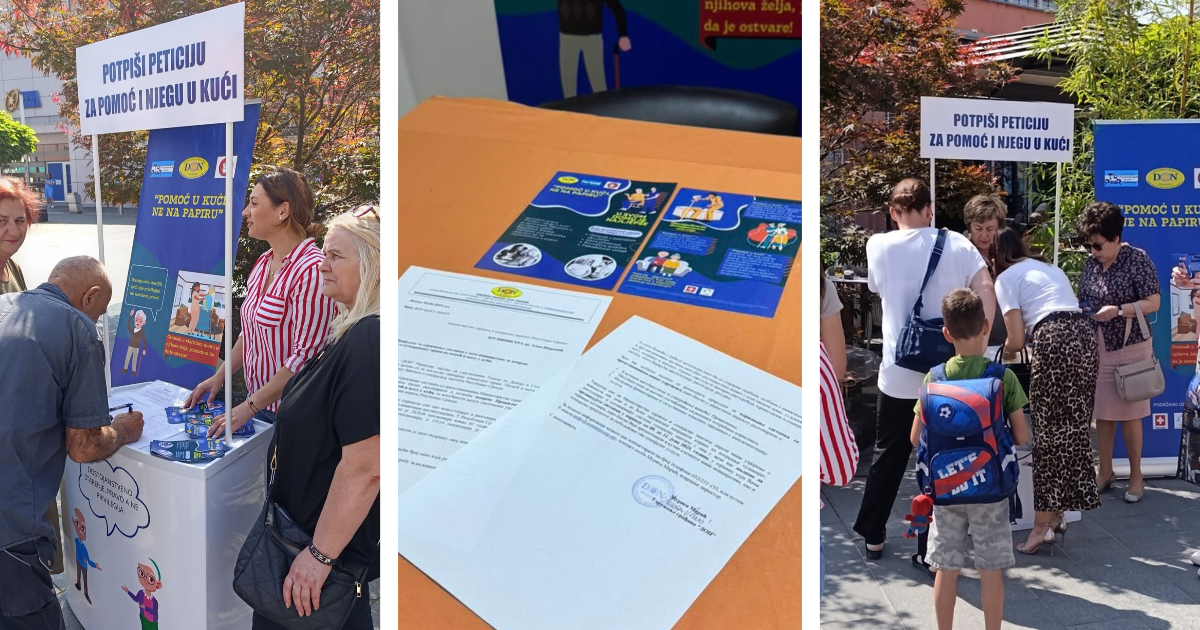
The initiative was submitted with the support of 2,983 citizens
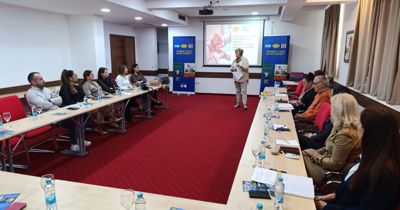
The citizens’ association “DON” from Prijedor, in cooperation with its partners “Stop Mobbing” from Trebinje and “Topeer” from Doboj, prepared the initiative through consultations with local communities, centres for social work, and pensioners’ associations, backed by written support from 2,983 citizens across Republika Srpska. The organisations state that they sent the initiative to the Ministry in October 2025, that it was officially received, but that no institutional response followed.
What the proposed amendments to the Rulebook seek to achieve
The initiative calls for measures that would ensure the right to “Home Care and Assistance” is applied in a uniform and fair manner across all local communities, with clear obligations and implementation mechanisms.
Through the initiative, the organisations propose that local governments be required to develop and adopt local by-laws and procedures, in order to clearly define responsibilities, eligibility criteria, financing, and the way the service is delivered at the local level. At the same time, they are calling on local self-government units to plan and finance this service through their budgets, as in practice—without an explicit budget line—the funding obligation is often not implemented.
To make implementation easier, the initiative also advocates standardising the role of gerontological home helpers (gerontodomaćice), with clearly prescribed training, work standards, and supervision, as a sustainable model of community-based support. In addition, it proposes that, wherever possible, part of the funding be directed towards developing community-based services rather than relying exclusively on institutional care, so that beneficiaries can remain in their own homes.
The organisations further note that the Ministry, as the body that adopts the Rulebook, has the authority to more clearly mandate obligations for local communities and encourage consistent implementation of legal solutions.
Reminder: the problem has existed for years, and the consequences are daily
Hundreds of elderly and ill people in Republika Srpska today live alone, without the support they need every day. Although laws recognise the right to home care and assistance, in practice this service is not available in most local communities. The initiative particularly highlights every elderly and frail person’s right to choose whether to remain in their own home or to be placed in an institution designated for such care.
According to Snežana Šašlija from the association “Topeer,” for older persons the key concepts are dignity and the right to choose how they will spend their later years:
“I have nothing against nursing homes for older persons, nor against placement in any institution, provided that the institution suits the person in question—that is, if the person chooses to live in such an institution. But in any case, it is necessary to leave the possibility for us to choose for ourselves. A gerontological home helper is a person who, with great patience, warmth, and compassion, cares for older persons in their own home.”
What often remains an “abstract right” in public debate is, in reality, a difficult and lonely life. When volunteers were available, pensioner Ljiljana Jakođović says she felt satisfied and happy. Now she faces major difficulties in organising everyday life:
“Sometimes a social services worker shows up, but it feels more like control than support. And I don’t have enough income to pay for a nursing home. I don’t. There are days when everything hurts. If only someone could at least come and clean my house—I don’t have the strength, I can’t.”
And it is not only about household chores, but about basic safety and survival: fear of debt and having electricity or water cut off, life without support, and without anyone who would even knock on the door.
What the initiative’s submitters expect
The organisations behind the initiative say they expect an invitation to a meeting and discussions with the Ministry regarding the proposed amendments to the Rulebook and possible models of cooperation, so that solutions are feasible in practice and accessible to those who need them most.
“The home care and assistance service is essential to enable older persons, persons with disabilities, and other vulnerable groups to live with dignity in their own homes, with adequate care, support, and protection. At the same time, this service significantly relieves pressure on the health and social welfare system, enabling a better allocation of resources. We are convinced that the Ministry of Health and Social Welfare shares our view of the importance of this issue, and that together we will take steps towards building a more humane, accessible, and responsible social protection system,” stated the Citizens’ Association “DON” from Prijedor.
This service is not an “additional benefit,” but a social right that already exists and must be made available in practice—especially where life without support means living in insecurity and abandonment.
For more information please follow the link FB PAGE.