The “Budi mi prijatelj” (“Be My Friend”) campaign emerged from the personal struggle of parents of children with developmental disabilities, but very quickly grew into a strong and recognisable voice of the entire Jablanica community. Born out of the need for understanding, support, and basic conditions for a dignified life for children, this initiative brought together parents, citizens, and institutions around a shared goal: creating an inclusive environment where no child is left behind.
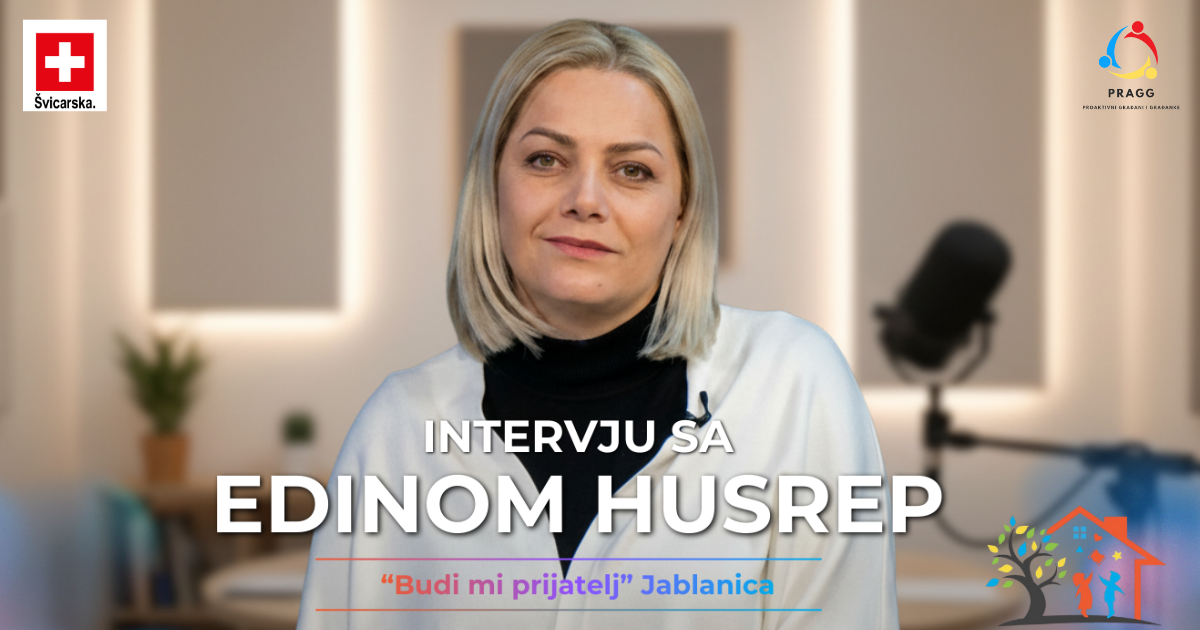
In a conversation with Edina Husrep, initiator of the campaign and founder of the “Budi mi prijatelj” Association in Jablanica, we discuss what motivated her to launch this initiative, the everyday challenges families face, the importance of an inclusive centre for children and parents, and the first tangible changes already achieved through the joint efforts of parents, citizens, and institutions.
As we close the year, we are reminded that inclusion is not a promise for tomorrow, but a responsibility today.
How did the “Budi mi prijatelj” campaign begin, and what was the key issue that motivated you to take action?
“The ‘Budi mi prijatelj’ campaign was born out of a personal struggle and the need to secure basic support for children with developmental disabilities in Jablanica—support that currently does not exist. As the mother of a boy on the autism spectrum, I face daily challenges for which there are almost no systemic solutions in our community.
Through conversations with other parents, it became clear that this was not an isolated case, but a shared and long-standing problem—the complete absence of service support and a centre for children with developmental disabilities. From this shared need and collective struggle of parents, the campaign was launched through the PRAGG project, followed by the establishment of the ‘Budi mi prijatelj’ Association in Jablanica.”
Why is an inclusive centre so important for children with developmental disabilities in Jablanica and their families?
“Parents of children with developmental disabilities in Jablanica are forced to travel to other cities to secure basic and necessary treatments for their children, which represents a significant psychological, physical, and financial burden. This situation further contributes to families withdrawing from social life, as they are exhausted and often lack support from their surroundings.
An inclusive centre would significantly improve the quality of life for children and their families by providing a safe space for development, play, social skills, educational workshops, and a sense of belonging. Parents would, for the first time, have a few hours for themselves and for basic daily tasks—something many have never had before, while some families are unable to travel at all.
The centre would be a place of inclusion for everyone, regardless of age or level of disability, offering parallel psychological and educational support for parents, and strengthening empathy and acceptance within society.”
How did cooperation with PRAGG contribute to the success of the campaign and the involvement of institutions?
“Cooperation with PRAGG played a crucial role in the success of the campaign, especially in communication with institutions. Through expert guidance, mentorship, and support in drafting requests, applications, and initiatives, we were empowered to approach the Municipality of Jablanica in a structured and well-argued manner.
This support enabled us to clearly articulate the needs of children and parents and to conduct the campaign in line with institutional procedures. Thanks to this cooperation, institutions began to take the issue more seriously and actively engage in addressing it. Honestly, without the initiated cooperation and comprehensive support of PRAGG, there would not have been any visible or concrete progress to date.”
What concrete changes has the campaign brought to the community, institutions, or public discourse on inclusion?
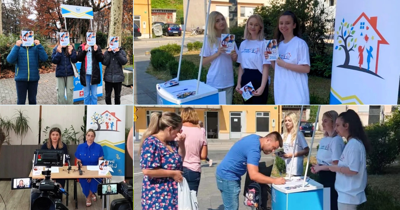
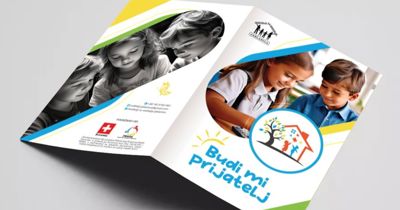
“The campaign has already brought visible and significant changes to the community, primarily by raising awareness about inclusion and the rights of children with developmental disabilities. Through street actions, distribution of informational leaflets, social media posts, and TV coverage, the public had the opportunity to learn about the real needs of these families.
As a result, the campaign was supported by numerous NGOs in Jablanica, the association’s ambassador Dijana Kukolj, individuals, and a large number of citizens—especially young people. Many stood shoulder to shoulder with the association to help achieve the shared goal as soon as possible. At the same time, institutions recognised the real need and provided concrete contributions and support.”
How did the Municipality’s support (allocation of premises and budget funds) change the course of the campaign, and what does it mean for parents?
“The support of the Municipality of Jablanica significantly changed the course of the campaign and gave it concrete strength and stability. Through submitted requests and initiatives, we were granted premises for use as an inclusive centre within a relatively short period.
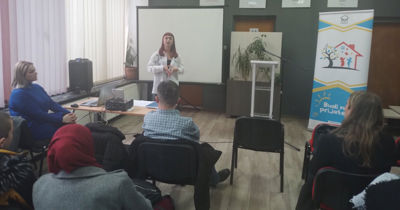
Additionally, through public hearings, the Municipality accepted our initiative and included the association in the 2025 municipal budget with an allocation of BAM 20,000. This decision represents major recognition of the association’s work and a clear message that the needs of children and parents have finally been acknowledged.
For parents, this means security, hope, and a strong incentive to continue even more decisively and confidently.”
Can you share one family experience that best illustrates why the centre is urgently needed?
“As the mother of a child on the autism spectrum, the hardest part was the feeling of being left alone, without systemic support or understanding. Every day brings new challenges, while at the same time you watch your child’s needs remain invisible to those who should be helping.
Still, my strength came from the realisation that I was not fighting only for my own child, but for all children and parents facing the same struggles. The solidarity of parents and their belief that change is possible kept me going. This shared struggle and hope for a more dignified life for our children did not allow me to give up.”
What is currently the biggest challenge, and what is most urgently needed for the centre to start operating?
“Our next steps are focused on activating the space we were granted—currently in the final stage of renovation—and transforming it into a safe and welcoming centre for children and families. The premises need to be furnished and equipped with didactic materials.
The biggest challenge remains securing sustainable funding for professional staff and developing the service support that has been missing for years. We want this place to be a home of acceptance, understanding, and hope, where no child will be invisible.
To parents, we say: you are not alone, and your struggle has meaning—even when you feel exhausted.
To institutions, we send a clear message: investing in children with developmental disabilities is not a cost, but a responsibility and an investment in a more humane society.
To the public, we say that inclusion begins with the heart, and together we can build a community where every child has a place.”
What can parents and children expect from the very first day the centre opens?
“With the opening of the centre, parents expect, above all, safe, professional, and continuous support for their children within their own community. They expect a place where their children can develop their potential, social skills, and sense of belonging—without constant travel and exhaustion.
For parents, the centre represents relief, hope, and the feeling that they are finally not alone in a struggle they have been carrying for years.”
What message would you like to send to citizens and institutions about the importance of inclusion and support for children with developmental disabilities?
“The ‘Budi mi prijatelj’ Association has shown that through the united voice of parents, supported by citizens, organisations, and institutions, real change can be initiated at the local level. The association has opened space for inclusion, understanding, and concrete support for children with developmental disabilities and their families.
The greatest value of the campaign lies in its message: no child should ever be forgotten, and inclusion must be a reality—not just a word.”
The story of the “Budi mi prijatelj” campaign demonstrates how far parents can go when their personal struggle turns into a shared mission. The opening of an inclusive centre in Jablanica is not merely an infrastructure project, but a powerful message of solidarity, responsibility, and care for those who have been invisible for far too long. This initiative reminds us that inclusion begins with understanding, but can only endure through concrete action—and that no child should ever be left without the support of the community they belong to.