For years, foster parents have warned about a problem that had very specific consequences for their families: after a child with developmental disabilities turned 30, the system's support changed, even though the need for round-the-clock care did not end.
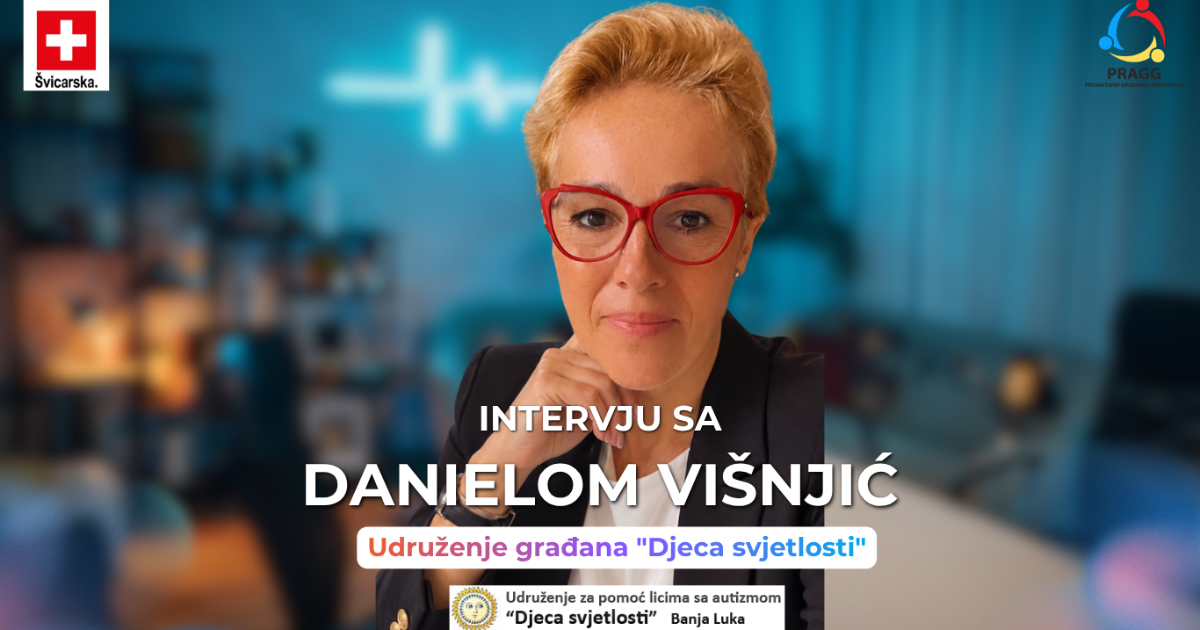
The campaign launched by the Association "Children of Light" with the support of PRAGG shows how persistent advocacy, legal support, and a stronger voice of the parents themselves can change the attitude of institutions towards the problem. In a conversation with Daniela Višnjić from the "Children of Light" Association, we talk about how that relationship changed, what was crucial for the change, and how years of advocacy led to a concrete change to the Social Protection Act.
When you started the campaign, foster parents lost certain rights after their child turned 30. What did it look like in the real life of a family, and what made you say that it's time to change this issue systemically?
While working with parents in the partner association Plavi Balon in Prijedor, I saw that the parents-caregivers are in a very difficult situation, which is getting worse and worse. The competent institutions revoked their right to compensation, applying the regulations restrictively, and leaving the parents without a monthly compensation that meant a lot to them financially, bearing in mind the fact that the parents-caregivers take care of their child with 100% disability all day and every day, who is completely dependent on the care and help of others, and because of which the parents-caregivers are unable to work and earn money. The fact that a mother cannot be separated from her child for more than a few minutes left a strong impression on me, while the competent institutions refuse to provide the necessary support to such a parent.
At the beginning of the campaign, how familiar were the institutions and decision-makers with the problem and how did they react when you first started talking to them about the need to change the regulations?
At the beginning of the campaign, the attitude of the competent institutions was very conservative, unprepared for any possibility of changing regulations and improving the position of parents-caregivers.
During the campaign, you organized public forums in Banja Luka, Gradiška, Prijedor and Bijeljina, provided legal support to parents and advocated for institutions. What moment or activity would you single out as a turning point after which you noticed that the attitude towards your request began to change?
Getting the first judgments from the competent courts, which supported our view that the law is being interpreted and applied incorrectly, was undoubtedly a wind at the back. Also, the change at the head of the Government of Republika Srpska meant a different approach towards parents of children with developmental difficulties, and after that everything started to change.
How important was it that not only organizations and experts speak in the campaign, but also the parents themselves? Have you noticed that their personal experiences have changed the way institutions, media or citizens understand this problem?
The parents themselves needed to speak in the campaign, because their experiences give a human face to a problem that is often viewed only through laws, statistics and administrative procedures. When a parent talks about everyday life, responsibilities and challenges they face, it's much harder to see the problem as just another social policy issue. We noticed that it was such personal stories that helped institutions, media and citizens to better understand how much systemic support means for the whole family and for the child.
Did the behavior of the parent-caregivers themselves change during the campaign? Did they become more willing to speak publicly about their problems, assert their rights, seek legal support, or directly approach institutions?
Yes, I believe so. During the campaign, we noticed that parent-caregivers became more willing to speak publicly about their experiences and openly demand the realization of their rights. Several parents stepped in front of the cameras to share their life stories; it was particularly significant for us that a father and his child agreed to be the faces of our billboards. That was an important sign that parents no longer wanted to be merely system beneficiaries, but active participants in advocating for changes that would improve their situation.
One of the goals was to establish a dialogue with relevant institutions and parliamentary caucuses. How did that relationship evolve from the start of the campaign to the moment the amendments to the Law were adopted? What specifically changed in their attitude toward this issue?
Initially, most representatives of parliamentary caucuses were not sufficiently familiar with the problems parent-caregivers face; however, once we presented the specific challenges and proposed solutions, they expressed strong support for resolving them. Through the campaign, we managed to open a more direct dialogue and bring this topic closer to decision-makers. It was particularly significant that, when the proposal to amend the Law on Social Protection finally reached the agenda of the National Assembly of Republika Srpska, the support was tangible, and the amendments were adopted without issue. This demonstrated to us the importance of persistent advocacy and directly connecting the experiences of parents with decision-makers.
Amendments to the Law on Social Protection have introduced a new right concerning the care of persons with developmental disabilities after they turn 30. What does this change specifically mean for the parents and families who have been highlighting this issue for years?
For parents and families, this change primarily means that their concerns and needs are no longer disregarded once a person with a developmental disability reaches the age of 30. After decades of pointing out this gap in the system, families have seen it acknowledged that the need for support persists into adulthood and must be covered by the social protection system. For many parents, this offers greater security and the hope that their child will not be left without support simply due to reaching a certain age limit. It is particularly significant to us that years of advocacy by parents and organizations have finally resulted in a concrete legislative change.
Looking back at the entire process today, what do you think was the decisive factor that allowed the initiative to evolve beyond a mere request from a single organization into an issue that elicited an institutional response?
I believe persistence and tenacity in our advocacy were crucial, as we refused to let the issue remain just a request from one organization. Through continuous engagement with institutions, dialogue with decision-makers, and the active involvement of parents, we succeeded in raising the profile of this topic and keeping it in the public eye. The media campaign and the personal stories shared by parents helped the general public better understand the daily challenges these families face. Ultimately, it was the combination of persistent effort, public visibility, and the voices of parents that transformed the initiative into an issue addressed by the institution through a concrete legislative change.
Has this campaign changed the way "Djeca svjetlosti" approaches public advocacy? What did you learn—or start doing differently—thanks to PRAGG’s support, and what will you carry forward into future initiatives?
Yes, the campaign has changed our approach to public advocacy, primarily by helping us understand the importance of making a specific issue visible to the public and ensuring it remains part of the ongoing conversation. Through PRAGG’s support, we learned to more effectively link our media work with the real-life experiences of those facing the issue, as their voices lend significant weight and credibility to our advocacy efforts. We also learned that we shouldn't wait for someone else to speak on our behalf; instead, we need to raise our voices clearly and with well-reasoned arguments, open up a space for dialogue, and insist that the issue becomes a priority for both institutions and the public. We will apply this experience to future initiatives—acting loudly, persistently, and in partnership with the very people directly affected by the issue.
The law has been changed, but the needs of people with developmental disabilities and their families have not simply vanished. What is the next change you wish to see, and—drawing on this experience—what message would you share with other parents and organizations striving to bring about systemic change?
Our next step is to fight to ensure that this legal right is backed by tangible support in everyday life—through accessible services, family support, and solutions that enable people with developmental disabilities to lead dignified, high-quality lives. This experience has shown us that change does not happen overnight, but that persistence—and connecting parents, organizations, the media, and institutions—can drive real progress. My message to other parents and organizations is not to give up or think their voices are too small; one must speak out, make demands, insist, and remain persistent, because that is the only way issues that have long gone unnoticed can become matters the system is compelled to resolve.
The experience of "Djeca svjetlosti" (Children of Light) demonstrates that changing the law is not merely the result of a formal initiative, but part of a process that transforms both the people involved and the relationships surrounding the cause. Parents have gained a stronger public presence, the organization has bolstered its advocacy approach, and institutions have moved from initial reticence to a concrete response. The legislative change that was adopted demonstrates that persistent advocacy, raising awareness of the issue, and involving those directly affected by it can lead to systemic change.