The change in the way public money is allocated to civil society organizations in Prijedor is no longer just written down in new regulations; the new rules have begun to be applied in practice.
The City of Prijedor has announced the first public calls for the allocation of budget funds to civil society organizations and youth organizations that are implemented according to the new regulations. At the same time, a public call for the selection of representatives of civil society organizations in the evaluation committee that will evaluate the received project proposals was also published.
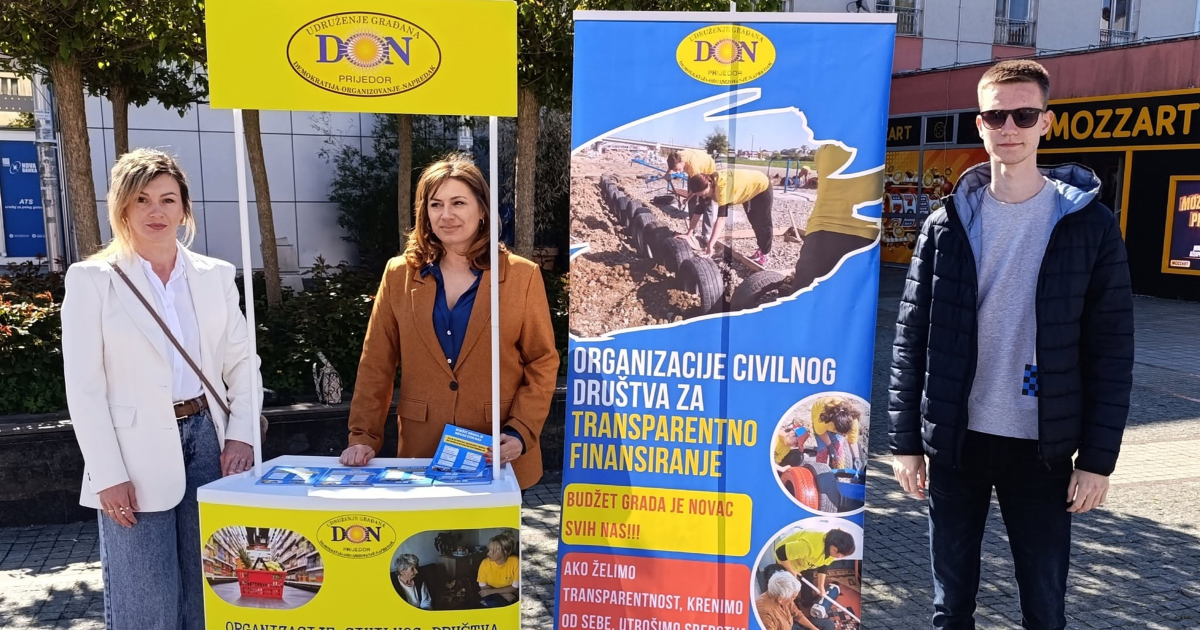
This marked the final and particularly important step in the process initiated by the Consumer Protection Association "DON" Prijedor, with the support of the project "Proactive Citizens" - PRAGG, to allocate funds from the city budget to civil society organizations more transparently, fairly, and based on clear criteria.
From unclear rules to a concrete solution
The need for change arose due to imprecise and insufficiently harmonized rules that regulated the financing of civil society organizations and youth organizations in Prijedor. Unclearly defined criteria, different practices in applying the rules, as well as insufficiently specified obligations regarding reporting and control of the use of funds left room for different interpretations and made it difficult to create a system in which all organizations have equal and clearly defined conditions.
And the issue of financing civil society is not only important for organizations that apply for public calls. According to information from the Consumer Protection Association “DON”, there are 185 civil society organizations operating in the Prijedor area, and it is estimated that between 11,000 and 13,000 citizens directly benefit from their programs and services. Therefore, transparent and responsible allocation of public funds directly affects the quality of support that citizens receive in their local community.
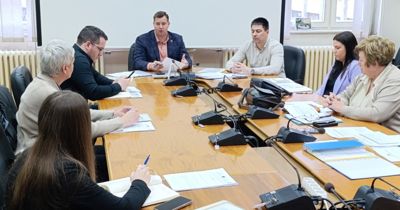
Therefore, the “DON” Association first analyzed the existing rules and identified space for their improvement, and then initiated a dialogue with the City Administration and other civil society organizations. This was followed by the formation of a joint working group, through whose work representatives of the local administration and civil society jointly considered existing solutions and prepared new ones. The process included meetings, consultations and discussions with civil society organisations, as well as presenting the proposed solutions to the wider community. The result of this work was two new rulebooks, for the distribution of funds to associations and foundations and for the financing of youth organisations.
It is not just important to adopt the rules, but to implement them
The adoption of the new rulebooks was a great result, but it was clear from the beginning that the real test of change would be their implementation.
This is exactly what is happening now.
The first public calls for funding of civil society organisations and youth organisations were announced according to the new rules, which for the first time transferred clearer criteria, more transparent procedures and more precisely defined obligations from the document into practice. At the same time, the new way of selecting representatives of civil society organisations in the evaluation committee shows how the change in the rulebook also solves very specific problems that previously existed.
In addition, one of the novelties is the possibility of appointing a substitute member of the committee from among civil society organisations. According to the previous solution, an organisation whose representative was a member of the committee could not nominate its project. Now, when there is a conflict of interest in relation to a specific project proposal, a member of the commission can be replaced by a substitute member. In this way, the impartiality of the decision-making process is simultaneously protected and all organizations can participate in the public call under equal conditions.
The change brought about by cooperation
The process in Prijedor shows that improving public policies does not have to be based solely on the demands of one party towards the other. In this case, civil society organizations pointed out the problem and offered concrete solutions, while the City Administration opened the space for these solutions to be jointly considered and translated into new rules.
From the initial analysis and initiative, through the formation of a working group and consultations, to the adoption of the rulebook and the announcement of the first public calls under the new rules, the entire path from recognizing the problem to its concrete change has been covered.
For civil society organizations in Prijedor, this means clearer conditions and more equal opportunities for financing quality projects. For the City Administration, it means a more precise and responsible system of budget management. And for citizens, it means more space for public money to be directed towards projects that bring real benefits to the local community.
The implementation of the new regulations has made an important step towards ensuring that transparency and accountability in financing civil society in Prijedor do not remain just declarative principles, but become part of everyday practice.
Follow the activities on their Facebook page.