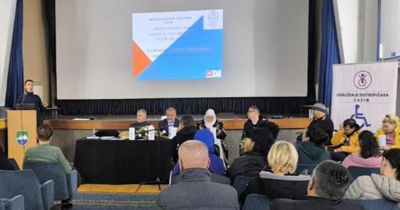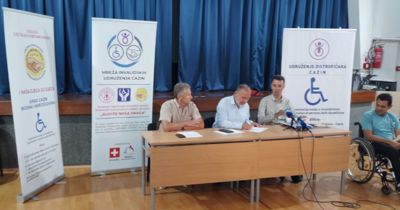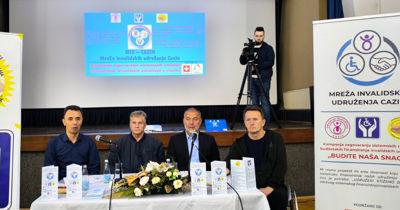
In Cazin, organisations of persons with disabilities worked for years with limited resources and without stable support. Today, for the first time, all members of the Network of Disability Associations have secured budget allocations, as well as an institutional framework for regular cooperation with the city administration. This means their role is now recognised in a systemic way, bringing greater stability for organisations and ensuring continuous support for persons with disabilities who rely on them.
Although organisations of persons with disabilities play a crucial role in building inclusive communities, their work is often constrained by a lack of long-term funding. The change in Cazin was achieved through an initiative launched with the support of the PRAGG project, whose approach is based on empowering local actors, fostering dialogue, and jointly developing solutions, positioning disability organisations as equal partners in community development.
An additional value lies in the fact that the Cazin model has already attracted attention from other local communities in the Una-Sana Canton, confirming that well-supported local initiatives can become examples of good practice beyond the communities where they originated.
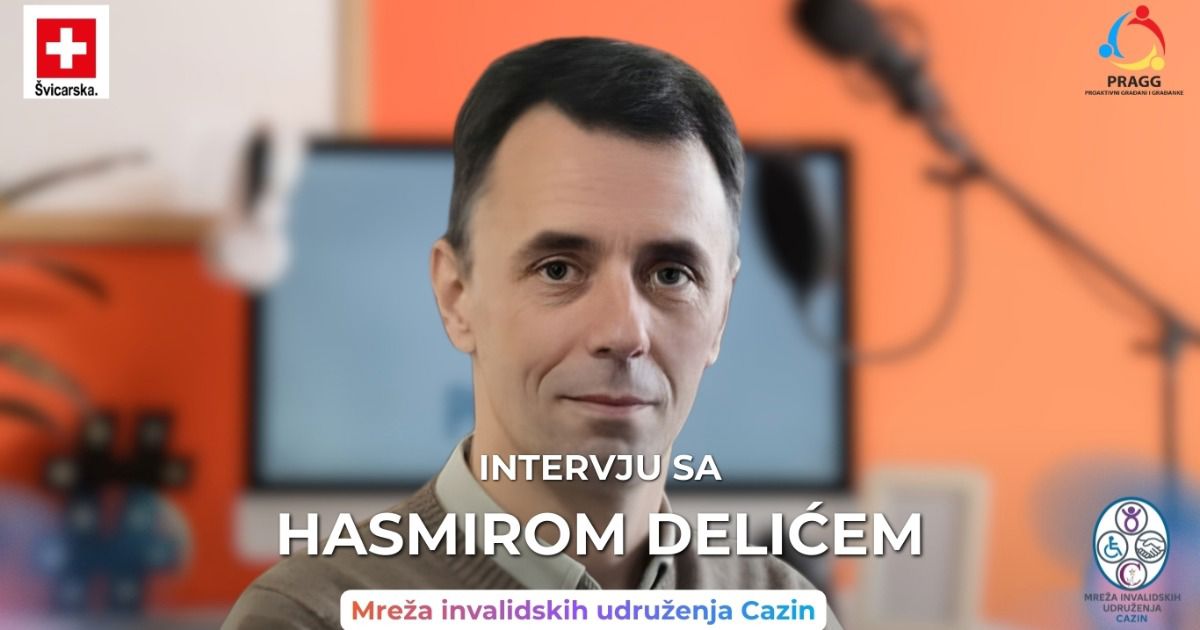
This interview with Hasmir Delić, representative of the Network of Disability Associations of Cazin, tells the story of how a change in approach can trigger broader institutional changes, and how support such as that provided by PRAGG can transform a local initiative into a model that inspires others.
1. What were the key challenges faced by organisations of persons with disabilities in Cazin before this initiative was launched?
Organisations of persons with disabilities (OPDs) in Cazin faced a lack of social dialogue with the city administration. Communication existed but was very limited, as was funding. Although some organisations had their own budget codes, the allocated amounts were minimal and did not cover even basic operating costs. In addition, funding was often planned arbitrarily by administrative services, without proper strategic planning.
2. How did the initiative launched by the Network of Disability Associations, with PRAGG support, contribute to changing the approach of decision-makers toward financing and supporting organisations of persons with disabilities?
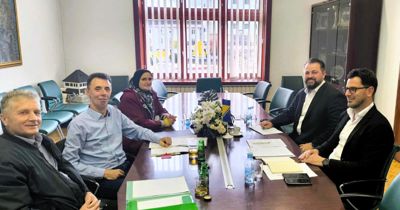
The MIU Cazin Network has been accepted as a partner in the community on issues related to disability, which is reflected in improved communication between the city administration and representatives of our associations.
The City Administration, specifically the Mayor of Cazin, issued written approval supporting the main objectives of the campaign:
Each member organisation of the network received its own budget code with increased allocations. Before the campaign, only two associations had budget codes with allocations of BAM 2,000. During the campaign, this amount increased to BAM 5,000, and in the 2026 budget each member organisation is planned to receive BAM 7,000. Other network members also received their own budget codes.
A new budget code of BAM 10,000 was introduced specifically for projects of disability associations.
The Head of the Mayor’s Office was appointed as the contact person responsible for maintaining open social dialogue with disability organisations.
3. Can you point to concrete changes in the behaviour or practices of institutions, citizens, and organisations of persons with disabilities that occurred during or after implementation of the initiative?
With new development projects being introduced in our city, representatives of our associations have been invited by the city administration to provide input to ensure inclusion of persons with disabilities in project implementation. Additionally, we were asked to nominate a representative to participate in the team reviewing conclusions from public consultations on the Draft Spatial Plan of the City of Cazin for the next 20 years.
Following adoption of the 2026 budget, which improved financing for our associations, communication activities carried out formally and informally by project team members resulted in positive public reception of the campaign’s success.
Associations that were on the verge of closure before the campaign have now stabilised, strengthened their capacities, and become competitive in project activities. Their members are now more visible and more satisfied with revitalised services provided by their associations.
4. How important is it that this initiative established systemic rather than one-off support, and what impact does this have on organisations and beneficiaries?
Systemic financing of core operations and partially of project activities gives disability associations the strength to compete for funding from higher levels of government and other donors. At the same time, beneficiaries who access services through associations become more active members of society.
5. The Cazin model has already attracted interest from other communities in the Una-Sana Canton. What makes this approach transferable elsewhere?
This model is grounded in provisions of the UN Convention on the Rights of Persons with Disabilities, ratified by Bosnia and Herzegovina, as well as the Federation law regulating organisations of persons with disabilities and representative associations. This provided additional motivation and strength to both our organisations and the city administration.
Such an approach benefits the entire community by strengthening services for persons with disabilities and improving oversight of public resources. Decision-makers and beneficiaries alike recognise the benefits, and local authorities understand that implementation of such measures will eventually become necessary since it is legally and internationally mandated. Following positive developments in our city, similar discussions have already started in other municipalities in the canton.
6. Have there already been concrete discussions or requests from other communities, and how do you see the potential for expanding this model?
We have already held discussions in the municipalities of Velika Kladuša and Ključ. In Velika Kladuša, thanks to responsible disability organisations and active advocates, the system was established quickly without the need for a campaign, while in Ključ we are still working to balance relationships among organisations of persons with disabilities.
7. From today’s perspective, what do you consider the biggest change brought about by this initiative supported by PRAGG — not only formally but also in terms of mindset and institutional behaviour?
First, we broke the stereotype that major changes cannot happen in small communities or be initiated by those considered the most vulnerable. Persons with disabilities made Cazin the first local government in the Una-Sana Canton and the third in the Federation of BiH to implement this financing system for disability associations.
Through social dialogue with decision-makers and institutions, they recognised us as partners rather than as a burden, acknowledging that we actively support our community and its citizens. Disability associations also realised that isolated, individual actions do not lead to systemic solutions and recognised that only systemic solutions are sustainable.
8. What message would you send to other local communities considering similar systemic measures to improve the position of persons with disabilities?
We call on you to recognise and value the contribution of persons with disabilities and their organisations in building inclusive societies. Long-term, transparent, and systemic financing of disability organisations is not merely an investment in organisations — it is an investment in dignity, equality, and equal participation of all citizens.
We encourage local governments to:
- Include disability organisations in planning, decision-making, and policy implementation processes;
- Establish mechanisms for regular social dialogue (such as councils, forums, and advisory bodies);
- Ensure transparent and long-term funding for associations, not only occasional or project-based support.
The experience from Cazin demonstrates that systemic change often begins at the local level, when organisations have the knowledge, space, and support to advocate for solutions, and institutions recognise the value of partnership. The PRAGG project provided precisely such a framework, confirming that thoughtful support can lead to lasting improvements in policies and services for persons with disabilities.
If this model continues to expand, Cazin may be remembered not only as an example of a successful initiative, but also as proof that more inclusive communities emerge when cooperation replaces unilateral decision-making, and systemic solutions replace short-term measures.